
MGCCC Jackson County Campus Police Department earns NIBRS certification
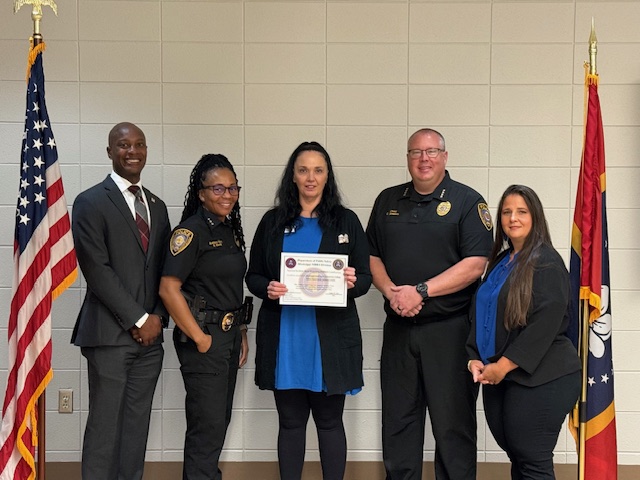
The Mississippi Gulf Coast Community College Jackson County Campus Police Department has successfully completed its National Incident-Based Reporting System (NIBRS) Certification, a significant milestone that strengthens campus safety, transparency, and accountability.
Certification was officially granted on August 29, 2025, following months of training, system upgrades, and rigorous data quality review.
The effort was led by Campus Police Chief Cary Houston, with key contributions from Assistant Chief Erica Moody and Marni Baron, dispatcher and administrative assistant to the chief. Their work ensured compliance with Mississippi House Bill 449, which mandates NIBRS compliance for all law enforcement agencies in the state.
“Earning NIBRS certification reflects our commitment to professionalism, accountability, and the safety of our campus community,” said Houston. “This certification ensures we are providing accurate, detailed crime data that supports informed decision-making, strengthens trust through transparency, and enhances our ability to serve students, employees, and the public.”
NIBRS certification means the department now meets the Federal Bureau of Investigation’s standards for detailed, incident-based crime data reporting. Unlike traditional summary reporting, NIBRS captures comprehensive information about incidents, including details about victims, offenders, and circumstances. This level of reporting allows for more accurate crime analysis and more informed decision-making.
The certification process requires law enforcement agencies to successfully submit incident-based data for at least six consecutive months while maintaining strict data accuracy standards, including an error rate of no more than four percent over multiple reporting cycles. Achieving this designation demonstrates the department’s commitment to transparency and data-driven policing.